
Closed Curtain
by Jafar Panahi
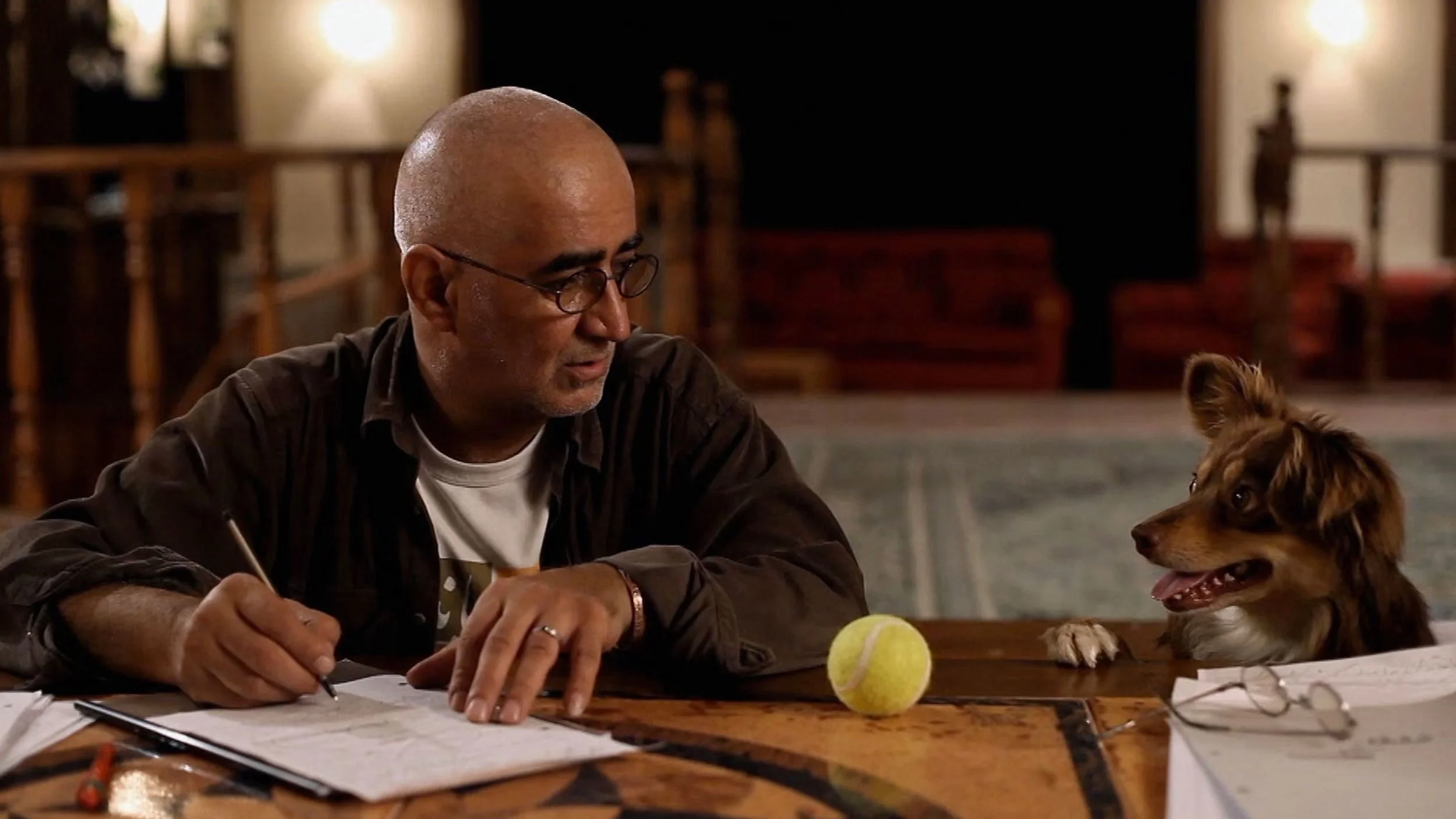
Filmed clandestinely during Panahi’s state-imposed filmmaking ban, Closed Curtain begins as the story of a reclusive screenwriter hiding in a seaside villa with his dog, only to unravel into a self-reflexive meditation on artistic confinement and psychological unrest.
As reality slips into metafiction, Panahi confronts his own forced isolation and the fragile boundary between creation and captivity.
-
Jafar Panahi was born in 1960 in Mianeh, Iran. He studied directing at the College of Cinema and Television in Tehran. Before embarking on feature films, he directed several short and medium-length films for Iranian television.
After several years of making short films and working as an assistant director for fellow Iranian filmmaker Abbas Kiarostami, Panahi achieved international recognition with his feature film debut, The White Balloon (1995). The film won the Caméra d’Or at the 1995 Cannes Film Festival, the first major award an Iranian film won at Cannes.
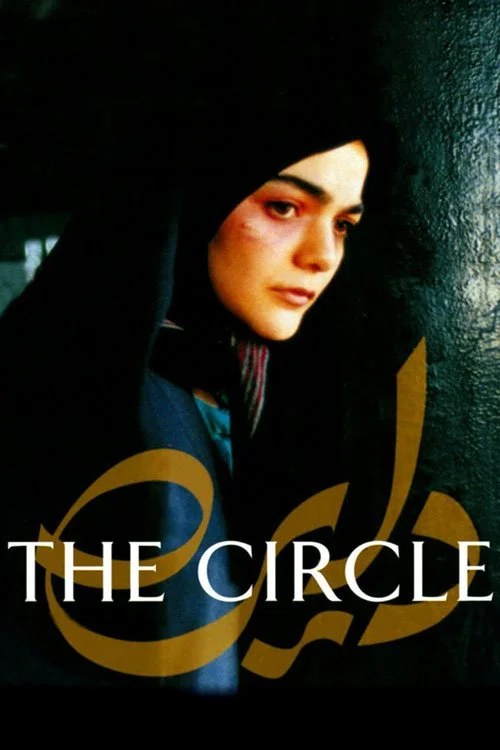
Panahi was quickly recognized as one of Iran’s most influential filmmakers. His films were often banned in Iran, but he continued to receive international acclaim from film theorists and critics and won numerous awards, including the Golden Leopard at the Locarno International Film Festival for The Mirror (1997), the Golden Lion at the Venice Film Festival for The Circle(2000), and the Silver Bear at the Berlin Film Festivalfor Offside (2006). His films are known for their humanistic perspective on life in Iran, often focusing on the hardships of children, the impoverished, and women. Hamid Dabashi has written, “Panahi does not do as he is told—in fact he has made a successful career in not doing as he is told.”
After several years of conflict with the Iranian government over the content of his films (including several short-term arrests), Panahi was arrested in March 2010 along with his wife, daughter, and 15 friends, and later charged with propaganda against the Iranian government. Despite support from filmmakers, film organizations, and human rights organizations around the world, in December 2010 Panahi was sentenced to six years in prison and a 20-year ban on directing any movies, writing screenplays, giving interviews with Iranian or foreign media, or leaving the country except for medical treatment or making the Hajj pilgrimage. While awaiting the result of an appeal he made This Is Not a Film (2011), a documentary feature in the form of a video diary. It was smuggled out of Iran on a flash drive hidden inside a cake and shown at the 2011 Cannes Film Festival. In February 2013 the 63rd Berlin International Film Festival showed Closed Curtain (Pardé) by Panahi and Kambuzia Partovi in competition; Panahi won the Silver Bear for Best Script. Panahi’s subsequent film Taxi also premiered in competition at the 65th Berlin International Film Festival in February 2015 and won the Golden Bear, the prize awarded for the best film in the festival. In 2018, he won the Cannes Film Festival Award for Best Screenplay (tied) for 3 Faces; he was unable to leave Iran to attend the festival, so his daughter, Solmaz Panahi, read his statement and received the award on his behalf.
Filmography:
The White Balloon (1995)
The Mirror (1997)
The Circle (2000)
Crimson Gold (2003)
Offside (2006)
This is Not a Film (2011)
Closed Curtain (2013)
Taxi (2015)
Three Faces (2018)
No Bears (2022)
It was Just an Accident (2025)
-
Year: 2013
Country: Iran
Runtime: 106 min
Color: Color
Language: Persian
Subtitles: English
Sound: 5.1
-
CREW
Producer: Jafar Panahi, Yousef Panahi, Hadi Saeedi
Director: Jafar Panahi
Writer: Jafar Panahi
Cinematography: Mohammad Reza Jahanpanah
Editor: Jafar Panahi
-
Berlin International Film Festival – Silver Bear for Best Screenplay
Asia Pacific Screen Awards – Jury Grand Prize (shared with The Past and Omar)
Nominated for several international critics’ prizes, including FIPRESCI recognitions
Frequently cited in global critics’ polls as one of the most significant “underground” films made under censorship.